

Self-care on a tight budget starts with the need you have today. If you’re tired after taking on several tasks, an evening with fewer decisions may be more useful than another activity you have to organise.
Identify the need before choosing the activity
Before you pick an activity, try saying what the need is. You can say, “I’m tired,” “I feel lonely,” or “I need to have a break.”
The different needs you have can require different responses. A quiet bath might be enjoyable but still leaves you feeling lonely. A busy social outing might drain you when you need more quiet time. You don’t have to find each activity to be restoring.
Ask yourself what would make the next few hours more manageable. This allows you to ask the right questions. You might not be able to solve the workload today, but you can fix a meal, put off a task, or ask for company. Small relief can matter without being a cure for a bigger problem.
Check the hidden cost of a free activity
Just because an activity doesn’t cost anything doesn’t mean it’s always easy for everyone to enjoy. Sometimes there are other things to consider, like transportation, childcare, your schedule, or how much energy you have. Even something as simple as spending time outdoors might be difficult depending on the weather, your health, or other responsibilities.
Someone might suggest visiting a free museum or attending a community event as a way to relax without spending money. But if you have to drive a long distance, pay for parking, or find someone to watch your children, the activity might end up costing more than you expected. Even staying home to enjoy a quiet afternoon can be difficult if you don’t have much privacy or have family members who need your attention.
Does the Activity Really Work for You?
Make rest possible
When you have a busy schedule, it’s easy to feel like you can’t relax until you’ve finished everything you need to do. But the problem with waiting until every responsibility is taken care of is that there’s usually something else waiting for your attention. Sometimes you have to make room for rest instead of expecting it to happen after everything is complete.
Maybe you’ve spent most of the day working, taking care of your family, and handling things around the house. You still have laundry to fold and a few other chores that need to be done, but you’re exhausted. Instead of pushing yourself to finish everything, you might decide to leave the laundry until tomorrow and spend a little time watching television or enjoying a quiet evening.
Of course, some responsibilities can’t always wait. If you’re caring for children or another family member, you might need to arrange for someone you trust to take over for a little while so you can have a break. If you’re working, taking the breaks you’re entitled to can also help you make time for rest without feeling like you’re neglecting your responsibilities.
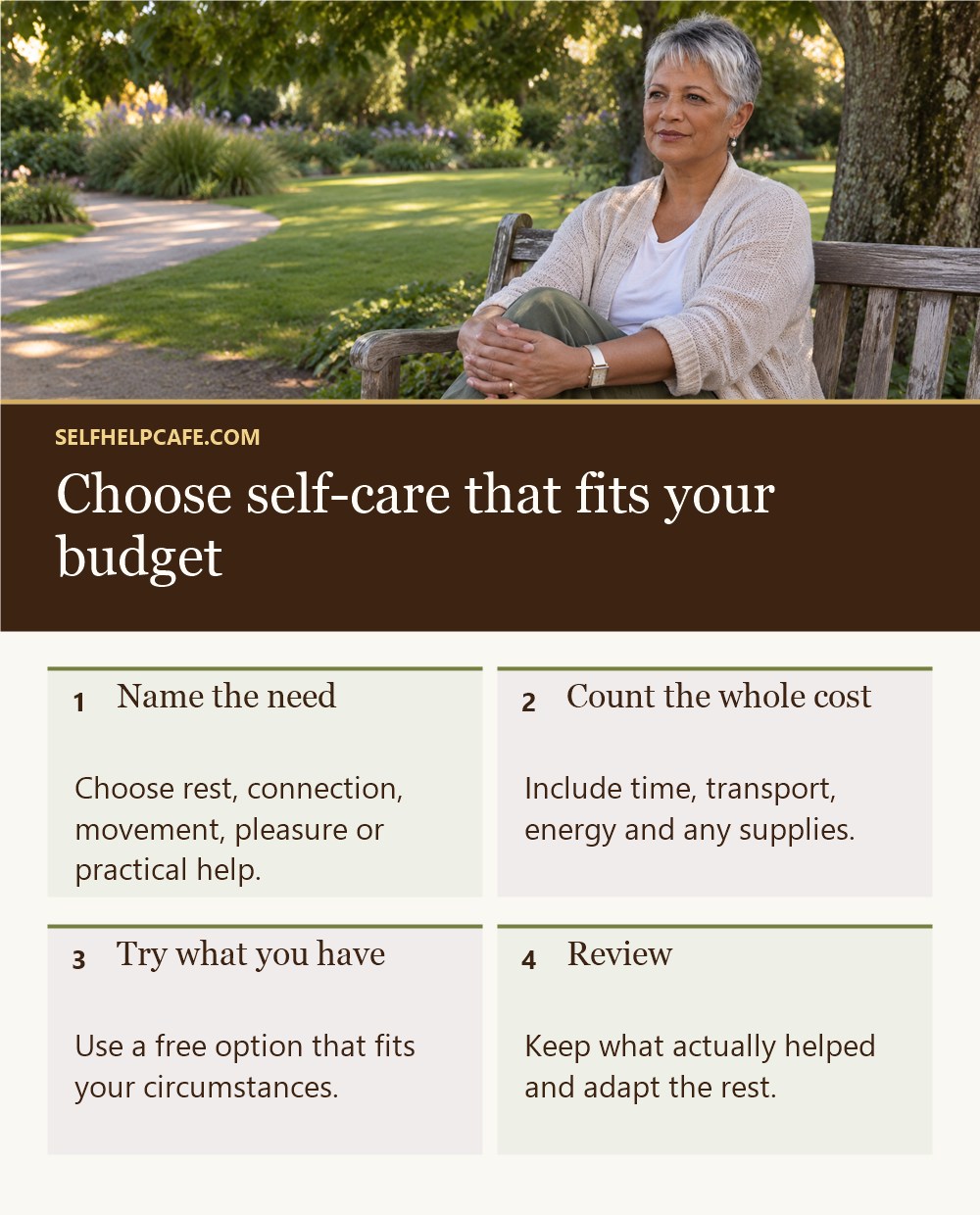
Read the visual guide as text
- Name the need. Choose rest, connection, movement, pleasure or practical help.
- Count the whole cost. Include time, transport, energy and any supplies.
- Try what you have. Use a free option that fits your circumstances.
- Review. Keep what actually helped and adapt the rest.
Choose a small way to connect
If you need company, you should say something like, “Would you like to call each other this week?” or “Can we sit together while we’re doing our own paperwork?” This can be easier than trying to go out for an entire evening.
You could say, “What kind of contact would help make you feel better.” You could say something like, “I’d like company, but I don’t want advice right now.” This gives the other person a way to respond.
Decide that you’re going to do a low-cost thing, such as going to a library, doing a community activity, or getting online. Look at the details before you go, such as whether it’s free and what you have to do to get there. Just because something is free doesn’t mean that you can still afford to do it. Connection can be fast and regular, and you don’t have to do something expensive for your get-together to have value.
Make room for enjoyment
Sometimes the best way to relax is by spending a little time doing something you already enjoy. It doesn’t have to be a new hobby, an expensive activity, or something you’re trying to get better at. Maybe you enjoy reading, baking, listening to music, or working on a small craft project. The important thing is finding something that makes you happy without feeling like you have to accomplish anything.
Think about a woman named Megan enjoys painting but hasn’t picked up a paintbrush in months. Every time she thinks about painting again, she starts looking at expensive supplies and watching videos about different techniques. Before long, something she used to enjoy starts feeling like another project she needs to complete.
Instead of worrying about having the right supplies or creating something beautiful, Megan decides to use the paints she already owns and spend a little time painting just for fun. She doesn’t worry about how the finished picture looks or if it’s something she would want to share with anyone. She just enjoys being creative without putting pressure on herself.
Take one thing off the list
When you’re feeling overwhelmed, you might think that you need to find another activity to help you relax. But sometimes the problem isn’t that you’re missing something enjoyable from your schedule. It might be that you already have too many responsibilities and need to find a way to make your day a little easier.
Maybe you’ve been preparing homemade dinners every evening because you feel like that’s what you should do. But after working all day and taking care of your family, spending another hour cooking and cleaning might leave you exhausted. Instead of adding a relaxation activity to your already busy evening, you could plan a few easier meals during the week or ask someone else in your household to help with dinner.
You might also realize that you’ve been agreeing to favors or keeping up with routines that aren’t necessary anymore. Maybe you regularly volunteer to help with something even though your schedule is already full. If it’s something you can reasonably step away from, it’s okay to explain that you don’t have the time or energy to continue doing it.
Set a limit before spending
If you want to buy something, start with the money that’s available after your regular commitments and priorities. Pick an amount that fits your situation instead of an idea of what wellness should cost.
According to MyMoney.gov’s spending guidance it recommends using a spending plan and being careful that discounts do not prompt unnecessary purchases. A reduced price still needs to fit the plan.
Ask what the purchase is going to change. Is it replacing something that you need, or is it just promising a new feeling? You can enjoy making a purchase without expecting it to fix your whole life. Allow yourself room to decide before you pay, especially if it’s a subscription, a refill, or has ongoing fees.
Notice what actually restored you
After you try something, you can say something like, “Did this help with the need I asked about?” Let the answer be descriptive. You could say something like, “The call helped me to feel more connected, but arranging it was hard.” This allows you to have information for next time.
Don’t require an immediate mood change. Some good actions, such as going to an appointment and talking about boundaries, might feel more uncomfortable before they help. Think about the purpose and the effect.
Keep notes only when useful. You don’t have to have something else to keep up with. As time goes on, you might see small changes and different options for different situations. Let this list be flexible. An activity that helped you last month might not be enough to make a choice when it comes to your health, schedule, or your needs.
Related reading. How to Deal with Financial Stress.
Frequently asked questions
1. What counts as self-care on a tight budget?
A choice that meets an actual need can count. It might be rest, a call, time outside, a library book or asking someone to share a task.
2. How can something free still have a cost?
A free event may require travel, child care, supplies or more energy than you have that day. Consider the whole effort before deciding.
3. What can I try when I have only a few minutes?
Try sitting quietly, putting one request on hold or stepping outside if that suits you. Choose a cue that fits what you need.
4. Should I budget for an occasional paid activity?
If it fits after essentials, choose a spending limit before you book. Check the total cost, including transport or supplies.
5. How do I know whether a routine helps?
Notice how you felt and what was easier afterward. Keep the parts that helped and change the ones that added more work.