

Financial stress can make an unopened envelope or an unexpected expense feel overwhelming. You may be dealing with low income, debt, caring responsibilities, illness or several problems at once. Difficulty paying for life is not proof of a bad attitude or a personal failing.
Begin with the situation in front of you. A useful first goal is to identify what needs attention soon, what information is missing and who could help. You do not have to solve every money problem in one sitting.
On this page

1. Make a small, current picture
Choose a manageable period, such as the days until your next expected income. Gather the statements you have and make a brief list of money available, expected income, payments due and essential costs. Mark anything uncertain so it does not quietly become an assumption.
If a full budget feels too much, start with one account or one bill. Use a notebook or a simple document you can keep private. A trusted person can sit alongside you without needing your passwords or taking control of your money.
Look for the size and timing of any gap. A payment due before payday is a different problem from costs that exceed income every month. Tracking spending may clarify the picture, but it cannot create income or make an unaffordable expense disappear.
2. Identify urgent needs and deadlines
Separate immediate needs, time-sensitive notices and costs that can wait for more information. Consider food, medication, housing, utilities and what you need to keep working or caring for someone. Include any legal deadlines or formal notices rather than leaving them unopened.
If you cannot pay everything, the consequences of delaying a payment matter. Do not assume the smallest bill or the most persistent caller should come first. A qualified local debt or housing adviser can help you compare the consequences in your circumstances.
The US Consumer Financial Protection Bureau’s guide to planning when you are behind on bills covers listing obligations, considering payment priorities and contacting creditors. Readers elsewhere should use relevant local services, particularly for housing, benefits and debt rights.
3. Ask about practical options
When you anticipate difficulty paying an established bill, use contact details from a statement or the organization’s verified website. Ask what hardship arrangements, payment timing changes or other support may be available. An enquiry does not guarantee an offer or oblige you to accept one.
You might say, “My income has changed, and I cannot afford the current payment. What options can you explain, including fees, interest and what happens when the arrangement ends?” Write down the answer, the person’s name or reference number and any date you need to respond.
Before accepting a plan, check whether the proposed payment fits your actual resources and ask for the terms in writing. If an unfamiliar collector contacts you, verify who they are and the debt before sharing personal information or promising a payment. Get local advice if the debt is disputed, old or connected to a legal notice.
Also consider support beyond repayments: income or benefit checks, food assistance, utility help, housing advice or a workplace support service. Availability and eligibility vary. Asking about assistance is a practical step, not a failure to manage alone.
4. Check help before committing
A friend or relative may offer support, but a loan can add pressure to both the budget and the relationship. You can decline or take time to consider it. Discuss affordability, repayment expectations and what happens if circumstances change before making a commitment.
Be cautious about expensive borrowing or services promising a rapid debt cure. Check an adviser’s qualifications, fees and suitability through independent local sources. A nonprofit label alone does not establish that a service is free or suitable.
The US Federal Trade Commission explains ways to evaluate debt help and avoid misleading promises. Read the terms of any proposed service and get independent advice about major decisions. You do not need to sign during a pressured call.
An emergency fund can be useful when there is room to save, but a fixed target should not become another source of shame. Review what is possible alongside urgent needs and obligations. If there is no spare money, the next step may be support or an income change rather than a stricter savings rule.
5. Make room for care and reflection
Consider a short appointment with your money tasks, followed by a break you can afford: a walk, a meal or a conversation. If worry is affecting sleep or daily life, seek emotional support alongside practical financial help.
If prayer, meditation, crystals or a psychic conversation have personal meaning for you, you can choose them as reflection. They do not establish the cause of debt, predict income or replace checking costs and deadlines. You do not need to pay for a reading or clear supposed karma to deserve financial support.
End today’s review with one concrete next step: open a notice, check a date, find an adviser or ask a question. Record when you will return to it. Progress may begin with better information or getting help, even before the numbers improve.
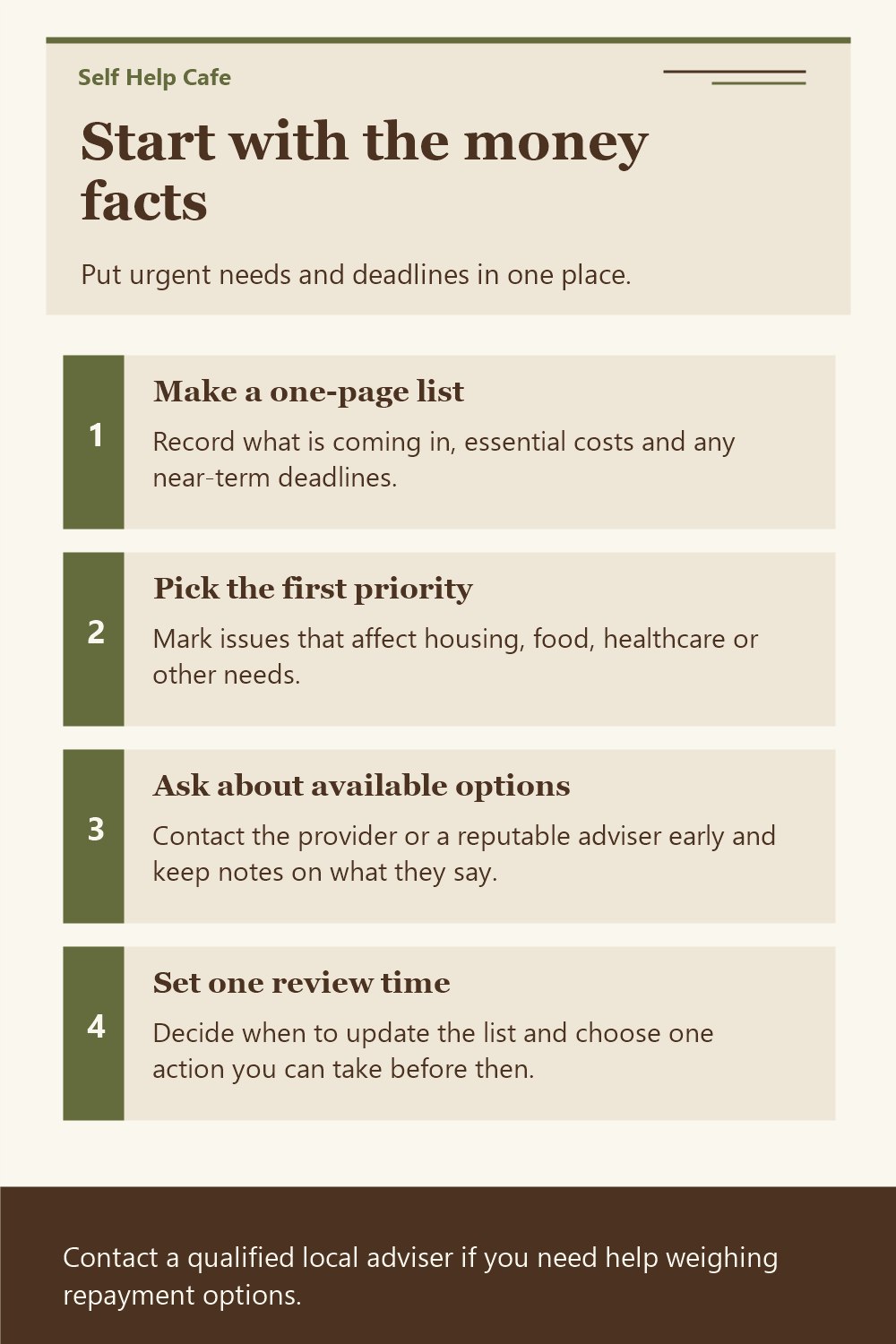
Read the infographic in text
Start with the money facts
Put urgent needs and deadlines in one place.
- Make a one-page list Record what is coming in, essential costs and any near-term deadlines.
- Pick the first priority Mark issues that affect housing, food, healthcare or other needs.
- Ask about available options Contact the provider or a reputable adviser early and keep notes on what they say.
- Set one review time Decide when to update the list and choose one action you can take before then.
Contact a qualified local adviser if you need help weighing repayment options.
‘Clear your negative money karma’? Really? I guess if I meditate hard enough while holding a crystal, all my debts will disappear! This article’s approach seems more magical than realistic—I’d prefer something grounded in actual financial strategies.
‘Manifesting money’ sounds like my new favorite hobby! Next thing you know, I’ll be meditating with my wallet under my pillow, hoping for cash to magically appear. Can I get an amen for the power of positive thinking?
‘Just be thankful for what you have’—sure, that’s gonna solve all my financial problems! Maybe I should also try wishing on a star while I’m at it! This article sounds like it’s from a self-help guru who sells crystals for a living.
This is just another one of those ‘think positive’ articles that doesn’t actually offer any real solutions. Financial struggles are complex and can’t be solved by just changing your attitude. It’s frustrating to read such simplistic advice.
While some aspects of the article touch on valuable concepts like budgeting and gratitude, it’s crucial to remember that financial issues often require tangible actions rather than solely a mindset shift. Knowledge about money management is equally important.
The idea that past life karma affects our current finances is absurd! Financial issues stem from economic conditions, personal choices, and sometimes bad luck. Suggesting otherwise undermines the real struggles people face today.
‘Create an emergency fund!’ they say. But when you’re living paycheck to paycheck, saving feels impossible. This advice could use some more practical steps instead of wishful thinking about karma and affirmations.
I absolutely loved this article! It offers such a fresh perspective on handling financial stress. The idea of gratitude as a tool to attract money is inspiring! I’m excited to try these methods and see positive changes in my life!